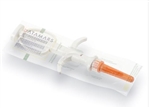
 911TinyChip Pet Microchip
The only bio-polymer microchip in the market
Thin, small and lightweight
“No return click” syringe
Material and description: Bio-compatible, FDA-approved SLIM polymer encapsulated microchip contains an individual, preprogrammed ID code in accordance with ISO Standards 11784/11785.
Special feature: our premium product: The Slim transponder has a thin, 14 gauge needle which allows for smooth, gentle implantation with minimal penetration force. Our special “No Return Click” syringe blocks the injector once depressed, stopping the microchip from being sucked back into the piston.
Package: each microchip is pre-loaded into a ready-to-use disposable syringe and detachable needle, sterilized by EtO gas and individually packed. Each microchip comes with a collar tag with the corresponding microchip number printed on the front of the tag.
BENEFITS AT GLANCE
- Thin, small and lightweight Implanter is extremely smooth and offers a painless administration. Features a 14 gauge needle and a No Click Return technology ensuring that the implantation process is as quick and painless for the animal as possible.
- The Slim microchip can be read up to 9.5 in or 24.2 cm away with a universal reader.
- Medical I.O Sterilazation. Single blister with six barcode labels per microchip.
MWI:
• Unique, unalterable and permanent animal identification system• Remarkably lightweight, at only 0.05 grams
• THIN microchip delivered in 14 gauge syringe doesn’t compromise read distance for needle gauge
• Ergonomic, ‘No Return Click’ – Listen for the “Click”! It means the chip is properly implanted and locks the injector, keeping the microchip from being retracted during syringe removal. Proper implantation helps prevent microchip migration!
• Removable needle for easy sharps disposal and biohazard cost savings; plastic syringe body can be recycled
• 15-digit, ISO-compliant microchips can be read internationally
• Polymer offers greater tensile strength and mechanical resistance
• Ideal for people who travel with their pets
• Includes Free Lifetime regeristration and Free Lifetime updates at petlink.net.
• FEI and USEF compliant for equine implantation

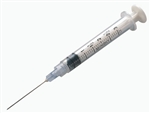 Monoject Syringe 3cc 22G X 1" Luer Lock, Single Syringe
Monoject Syringe is a sterile, single-use, individually packaged syringe used with or without a needle. Designed with a polypropylene barrel and plunger rod, latex-free, and contained in a rigid casing. Barrel has graduated markings for accuracy.
Our Price: $0.45 NON-Returnable Item - please verify size prior to ordering
 (1)
(1)
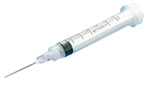 Monoject Syringe 3cc 22G X 3/4" Luer Lock, Single Syringe
Monoject Syringe is a sterile, single-use, individually packaged syringe used with or without a needle. Designed with a polypropylene barrel and plunger rod, latex-free, and contained in a rigid casing. Barrel has graduated markings for accuracy.
Our Price: $0.56 NON-Returnable Item - please verify size prior to ordering
(1)
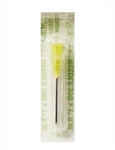 Terumo Needles 20G X 1" (Regular Wall)
Sterile, single use hypodermic Terumo needles. Silicone coated for easy penetration. Terumo needles are a favorite to use for subcutaneous fluid administration. Extremely sharp and unique bevel design provides comfortable injection.
Our Price: $0.58 NON-Returnable Item - please verify size prior to ordering
(2)
![Monoject Oral Medication Syringe With Tip Cap, 3 ml [1/2 tsp]](//cdn4.volusion.store/qxyca-qbdtq/v/vspfiles/photos/18055-1.jpg?v-cache=1657699370 "Monoject Oral Medication Syringe With Tip Cap, 3 ml [1/2 tsp]") Monoject Oral Medication Syringe With Tip Cap, 3 ml (1/2 Tsp)
Monoject Oral Medication Syringe With Tip Cap, 3 ml (1/2 Tsp)
Oral Medication Syringe is used in for the administration of medications and in feeding liquid diets. Latex-Free. After filling syringe, place cap on syringe tip to prevent leakage of medication. Syringe barrel graduations 0.1 ml [1/8 tsp].
Our Price: $0.66 NON-Returnable Item - please verify size prior to ordering
 Monoject Syringe 3cc 25G X 5/8" Regular Luer, Single Syringe
Monoject Syringe is a sterile, single-use, individually packaged syringe used with or without a needle. Designed with a polypropylene barrel and plunger rod, latex-free, and contained in a rigid casing. Barrel has graduated markings for accuracy.
Our Price: $0.72 NON-Returnable Item - please verify size prior to ordering
(1)
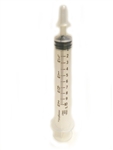 Monoject Oral Medication Syringe With Tip Cap, 10 ml
Oral Medication Syringe is used in for the administration of medications and in feeding liquid diets. Latex-Free. After filling syringe, place cap on syringe tip to prevent leakage of medication. Syringe barrel graduations 0.2 ml [1/4 tsp].
Our Price: $0.84 NON-Returnable Item - please verify size prior to ordering
 Monoject Curved Tip Syringe 12cc, Single Syringe
Monoject Curved Tip Syringe (412) features a long, curved tip designed to infuse wounds, anal glands and abscesses. Also used to dispense essential oils and other liquids more easily, and more precisely. Non-sterile. Latex-Free.
Our Price: $0.97 NON-Returnable Item - please verify size prior to ordering
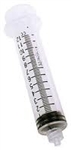 Ideal Syringe 12cc, Without Needle, Luer Lock, Each
Ideal Syringes are packaged with each syringe in a sterile, hard pack. Latex free. Autoclavable. Luer Lock tip. Smooth and accurate delivery design.
Our Price: $1.03 NON-Returnable Item - please verify size prior to ordering
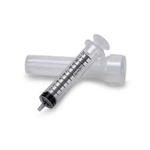 Ideal Syringe 12cc, Without Needle, Regular Luer, Each
Ideal Syringes are packaged with each syringe in a sterile hard pack. Latex free. Autoclavable. Luer Slip tip. Smooth and accurate delivery design.
Our Price: $1.13 NON-Returnable Item - please verify size prior to ordering
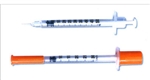 CarePoint VET U-40 Insulin Syringe 3/10cc, 29G x 1/2", 10/Bag
CarePoint Vet Insulin Syringes feature large, bold, easy-to-read permanent markings for accurate dosage and lubricated needles for injection comfort. CarePoint Pet insulin syringes are designed for comfort and precision. Features a comfortable finger grip for better injection control. Packaged in convenient polybags of ten insulin syringes.
Our Price: $1.83 NON-Returnable Item - please verify size prior to ordering
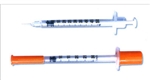 CarePoint VET U-100 Insulin Syringe 1/2cc, 29G x 1/2", 10/Bag
CarePoint Vet Insulin Syringes feature large, bold, easy-to-read permanent markings for accurate dosage and lubricated needles for injection comfort. CarePoint Pet insulin syringes are designed for comfort and precision. Features a comfortable finger grip for better injection control. Packaged in convenient polybags of ten insulin syringes.
Our Price: $1.83 NON-Returnable Item - please verify size prior to ordering
 Ideal Syringe 35cc, Without Needle, Regular Luer, Each
Ideal Syringes are packaged with each syringe in a strong, hard pack cartridge. Latex free. Autoclavable. Regular Luer tip [Luer Slip]. Smooth and accurate delivery design.
Our Price: $1.95 NON-Returnable Item - please verify size prior to ordering
 Petrodex Finger Toothbrush Dog & Cat, 2 Count
Petrodex Finger Toothbrush is an innovative and easy way to clean your pet's teeth. The Finger Toothbrush offers an effective way of cleaning teeth, removing plaque and food debris.
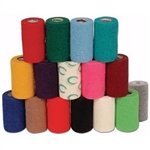 Powerflex Bandage 4"x 5 Yard Roll, Purple
A cohesive flexible bandage that does not stick to skin or hair, and provides consistent compression without the danger of constriction. Won't shred - high abrasion resistance. Sweat and water resistance. Easily hand tears for ease of application.
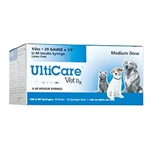 UltiCare VetRx Insulin Syringe U-40 .5 cc, 29G X 1/2", 10/Bag
Sterile insulin syringe with attached Ulti-Fine 29 gauge needle for use with U-40 insulin products. Recommended to use with Vetsulin and ProZinc insulins (U-40) and for 20 units or less insulin dosage in patients with diabetes.
Our Price: $2.48 NON-Returnable Item - please verify size prior to ordering
 Monoject Oral Medication Syringe With Tip Cap, 6 ml
Oral Medication Syringe is used in for the administration of medications and in feeding liquid diets. Latex-Free. After filling syringe, place cap on syringe tip to prevent leakage of medication. Syringe barrel graduations 0.2 ml [1/4 tsp].
Our Price: $2.55 NON-Returnable Item - please verify size prior to ordering
 Terumo Sur-Vet Syringe 3 cc, 22G X 3/4", Luer Lock, Single Syringe
Sterile syringe with detachable needle known for extreme sharpness. Clear syringe barrel with bold, precise scale markings. Translucent needle hub for quick observation of flashback. Blister packaging is tamper evident and cost efficient.
Our Price: $2.88 NON-Returnable Item - please verify size prior to ordering
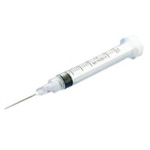 Monoject Syringe 3cc 22G X 1" Regular Luer, Single Syringe
Monoject Syringe is a sterile, single-use, individually packaged syringe used with or without a needle. Designed with a polypropylene barrel and plunger rod, latex-free, and contained in a rigid casing. Barrel has graduated markings for accuracy.
Our Price: $2.92 NON-Returnable Item - please verify size prior to ordering
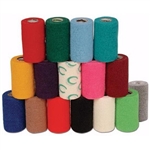 Powerflex Bandage 4"x 5 Yard Roll, Red
A cohesive flexible bandage that does not stick to skin or hair, and provides consistent compression without the danger of constriction. Won't shred - high abrasion resistance. Sweat and water resistance. Easily hand tears for ease of application.
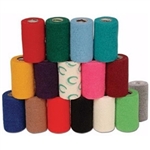 Powerflex Bandage 4"x 5 Yard Roll, Neon Green
A cohesive flexible bandage that does not stick to skin or hair, and provides consistent compression without the danger of constriction. Won't shred - high abrasion resistance. Sweat and water resistance. Easily hand tears for ease of application.
 Powerflex Bandage 4"x 5 Yard Roll, Light Blue
A cohesive flexible bandage that does not stick to skin or hair, and provides consistent compression without the danger of constriction. Won't shred - high abrasion resistance. Sweat and water resistance. Easily hand tears for ease of application.


